At Kō‘ele, inland from Lānaʻi’s coast, the former Lodge has become a wellness retreat surrounded by Cook pines and banyan trees. Its ninety-six rooms and suites sit alongside private treatment houses, onsen baths and a sculpture garden. Guests work with guides to organise programmes around their health and wellbeing; the restaurant is Sensei by Nobu.
Sensei Lānaʻi opened in November 2019, seven years after Larry Ellison acquired roughly 98% of the island’s land. The purchase included two Four Seasons resorts, the water utility and around a third of its housing. Behind the much-repeated acreage figure was an acquisition reaching into both the visitor economy and residents’ daily lives.
Ellison developed Sensei with physician David Agus. The company’s approach brings personalised health programmes into a hotel setting, with nutrition, exercise and rest informing each guest’s itinerary. The retreat occupies the former Lodge at Kō‘ele, redesigned by Todd-Avery Lenahan. The island’s other Four Seasons property is on the coast, giving the two hotels markedly different settings.
Food production was part of Sensei’s plans before the retreat opened. Its Lānaʻi farm was announced in 2018, with produce intended for the Hawaiian market and community. By 2025, Civil Beat reported vegetables and lettuce growing in advanced greenhouses on a portion of the island’s former agricultural land.
Agriculture has a long and complicated place here. Lānaʻi’s Native Hawaiian history precedes the ranching and plantation businesses that later transformed its landscape. James Dole purchased most of the island in 1922, and plans for Lānaʻi City followed in 1923 to support pineapple production. The plantation operated until 1992. Its history survives in the homes, family records and oral histories preserved by the Lānaʻi Culture & Heritage Center.
Ellison’s projects have brought investment beyond the hotels. He funded community facilities and maintained full wages for furloughed hospitality workers during the pandemic, according to Civil Beat. In 2022, his management company, Pūlama Lānaʻi, broke ground on Hōkūao, a privately funded development of seventy-six affordable homes.
Housing remains difficult to secure. Reporting in December 2024 described efforts to revive a separate low-income development, where the cost of water and sewer connections had helped stall construction. Public agencies and Pūlama Lānaʻi had agreed to cooperate on infrastructure costs. Local salaries, the report noted, were far below what was needed to buy a home at prevailing prices.
The overlap between property and employment makes decisions by Pūlama Lānaʻi particularly consequential. It is the island’s largest employer; some residents also rent homes within Ellison’s holdings. In September 2025, its announcement that it would close a construction-related division drew criticism from local councilman Gabe Johnson over the loss of fifteen jobs. The company said specialist work would move to outside contractors and encouraged affected staff to apply for other positions.
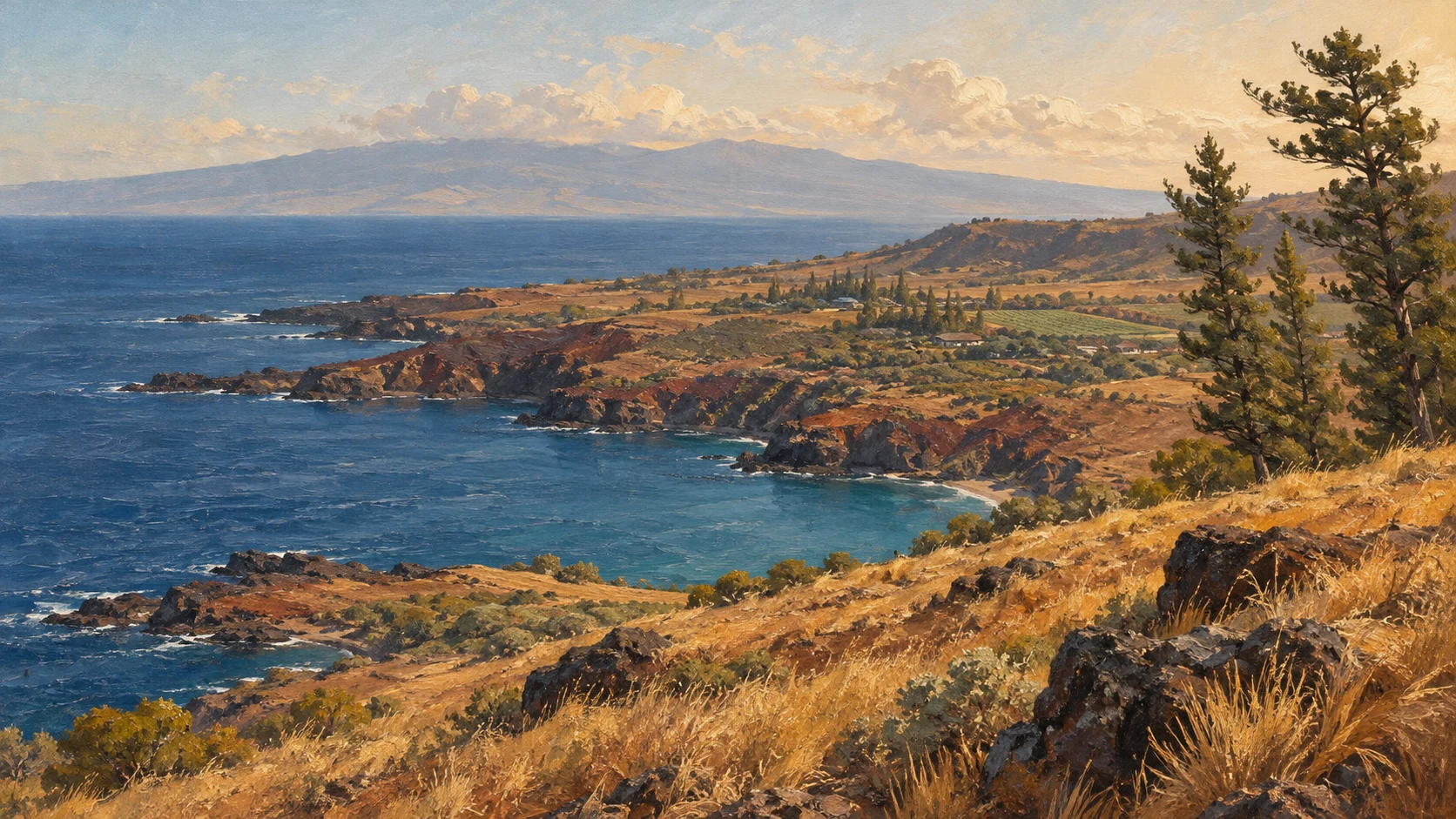
For visitors, Lānaʻi offers two carefully developed versions of a Hawaiian stay: the coast and the upland retreat. For the community, the same ownership reaches into workplaces, housing and water. A change in contractor, a new housing connection or an additional home can carry as much significance locally as a resort opening does abroad.
Sources & further reading
- Four Seasons · Sensei Lānaʻi opening, 2019 ↗
- Honolulu Civil Beat · Ownership, investment and employment, September 2025 ↗
- Honolulu Civil Beat · Low-income housing, December 2024 ↗
- Lānaʻi Culture & Heritage Center · Plantation life ↗
- Lānaʻi Culture & Heritage Center · Changing landscapes ↗
- Lānaʻi Culture & Heritage Center · About ↗