Héctor Sulaimán
Entrepreneur, investor & founding member of Scholas México
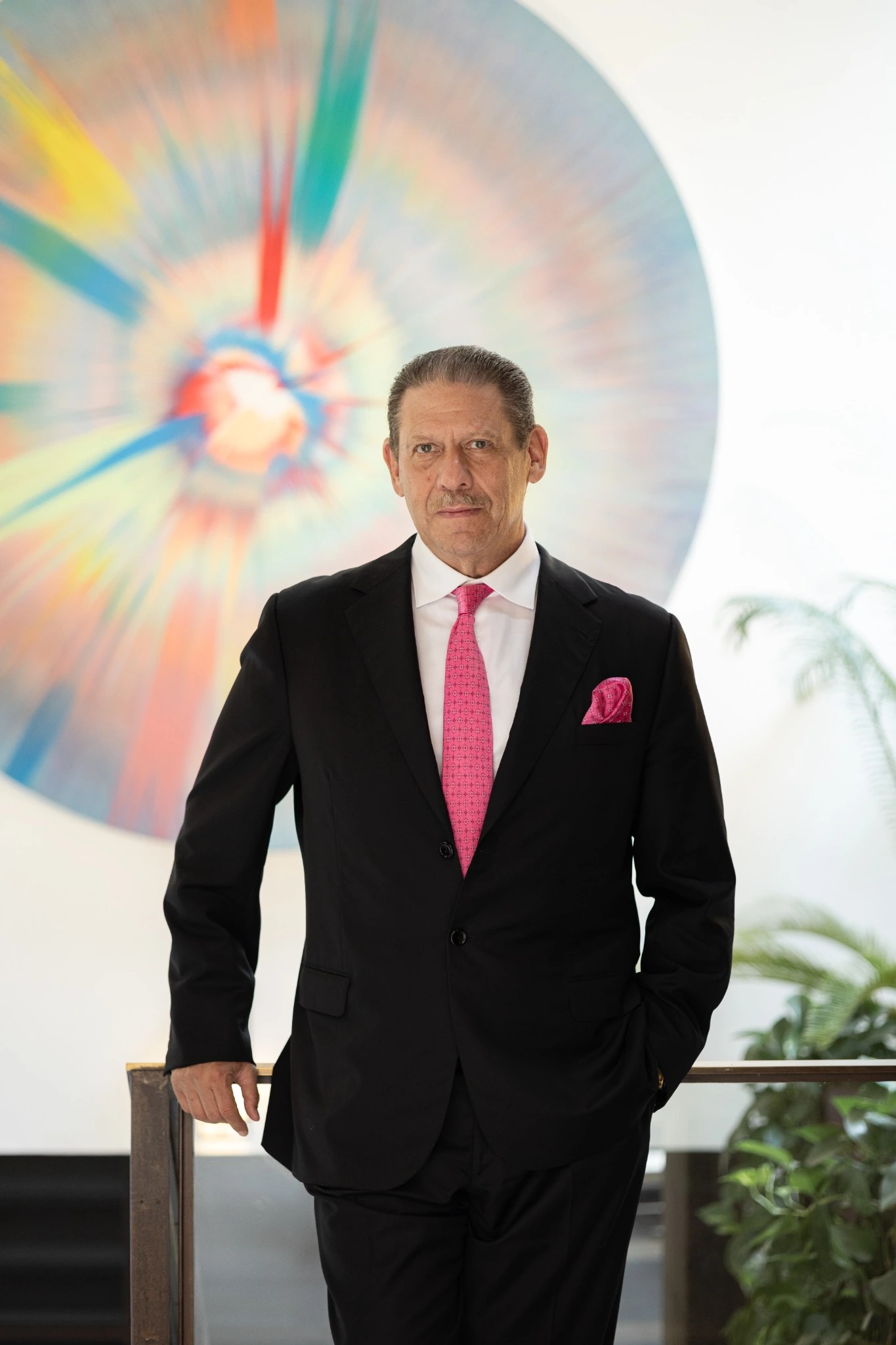
Héctor Sulaimán is a Mexican entrepreneur and investor whose career spans energy, infrastructure, security, pharmaceuticals and technology. Trained in law, with postgraduate studies in government at Harvard, he has worked as a business founder, adviser and board member. He is the son of José Sulaimán, who led the World Boxing Council for 38 years, and a founding member of Scholas Occurrentes in Mexico, part of the educational movement promoted by Pope Francis that brings young people together through education, sport and the arts. His work connects the business world with two enduring commitments: the boxing community he grew up around and creating opportunities for young people.
Your father, José Sulaimán, spent decades at the centre of boxing. When you think about growing up around him, what did you notice about the way he treated people that you only understood later in life?
Growing up, I saw my father surrounded by world champions, promoters, presidents, businessmen and some of the most influential people in the world. But what stayed with me was that he never seemed particularly impressed by status. He could be speaking with a head of state one moment and, a few minutes later, give exactly the same attention to an unknown boxer who needed his help. As a child, I noticed it, but I did not fully understand it. With time, I realized that this was one of his greatest qualities: he saw the person before the title. He had an extraordinary ability to make people feel important, because to him they genuinely were. Later in life, after having the privilege of meeting presidents, world leaders, great businessmen, champions and Pope Francis, I understood the depth of that lesson. That is probably one of the most important things my father ever taught me without actually sitting down to teach it. Respect should never depend on who is standing in front of you.
The Sulaimán name is known around the world through boxing, but you built a career across several businesses. How did you find your own direction, and what was the first venture you felt was truly yours?
Carrying the Sulaimán name has always been an enormous source of pride, but it also came with a responsibility: I never wanted my identity to depend exclusively on what my father had accomplished. I studied Law and later Government at Harvard because I was interested in understanding how institutions, business and public life work. From there, my professional path gradually expanded into law, infrastructure, energy, oil and gas, security, pharmaceuticals and technology. I became involved as an entrepreneur, investor, advisor and board member, and every sector forced me to learn a completely different language. I would say that becoming the founder of the Scholas Occurrentes Mexico Foundation was one of the moments when I most clearly felt that I was helping to build something that reflected my own values and sense of purpose. It showed me that my path would not be defined only by business, but also by the ability to create opportunities and positive impact for others. I never saw that process as separating myself from my father's legacy. Quite the opposite. I wanted to take the principles I learned from him (work, loyalty, perseverance and service) into areas that were entirely my own responsibility. Eventually I understood something very important: honoring a legacy does not mean living in someone else's shadow. It means taking what you received and having the courage to build something new with it.
Energy, pharmaceuticals and security are very different industries, each requiring specialist knowledge. When you entered those businesses, how did you decide who to trust and what you needed to learn yourself?
One of the first lessons I learned in business is that you do not have to know everything, but you must understand enough to know what questions to ask and whom to trust with the answers. Energy, pharmaceuticals, security, infrastructure and technology are extraordinarily specialized fields. It would be irresponsible to pretend that one person can master every technical aspect. My responsibility as an entrepreneur has therefore been to surround myself with people whose knowledge is greater than mine in their particular discipline, while developing enough understanding myself to challenge assumptions, evaluate risks and make informed decisions. Choosing those people is perhaps more important than choosing the business itself. I look for competence, of course, but also character. Technical ability can be measured relatively quickly; integrity takes much longer to discover. Experience has made me increasingly attentive to that distinction. I have also learned never to invest only in a project. You are ultimately investing in people. A brilliant business plan in the wrong hands can become a disaster, while good people with experience, discipline and shared values can overcome extraordinary difficulties. That principle applies equally in business, boxing and social projects: the quality of the people around you ultimately determines the quality of what you are able to build.
Looking back, which business decision was the hardest to make at the time?
What was at stake, and how do you feel about the choice you made today? Without question, one of the hardest decisions of my business life came during the COVID-19 pandemic. Mexico, like much of the world, practically came to a standstill. Projects stopped, uncertainty took over, and suddenly I found myself thinking not only about companies or investments, but about all the people who depended on me: my employees, my partners and their families. They depended on me financially, but also, in many ways, emotionally. I could not simply tell them that there was no work and leave them to face that uncertainty alone. At that moment, I made the decision to go all in on the pharmaceutical sector, an industry in which I had no previous experience. It was a major risk, but doing nothing felt like an even greater risk. My priority was very clear: I wanted to keep every member of my team working and, above all, continue paying their full salaries. I felt a deep responsibility toward the people who had stood beside me for years, and I knew that leadership meant being there precisely when circumstances were at their worst. I invested heavily, surrounded myself with people who knew the industry far better than I did, learned as quickly as I could and committed everything necessary to make the project work. Fortunately, it became a success. But what I value most today is not the business result itself. It is the fact that, during one of the most difficult periods our generation has experienced, we were able to keep our people together and no one was left behind. That experience changed the way I understand leadership. I learned that the hardest decisions are sometimes the ones where there are no guarantees, only responsibility. In moments of crisis, leadership is not about protecting what you have; it is about having the courage to risk something of your own to protect the people who depend on you.
Through Scholas, you spent time with Pope Francis and helped bring his educational mission to Mexico. Was there something he said or did in private that has stayed with you and influenced how you live?
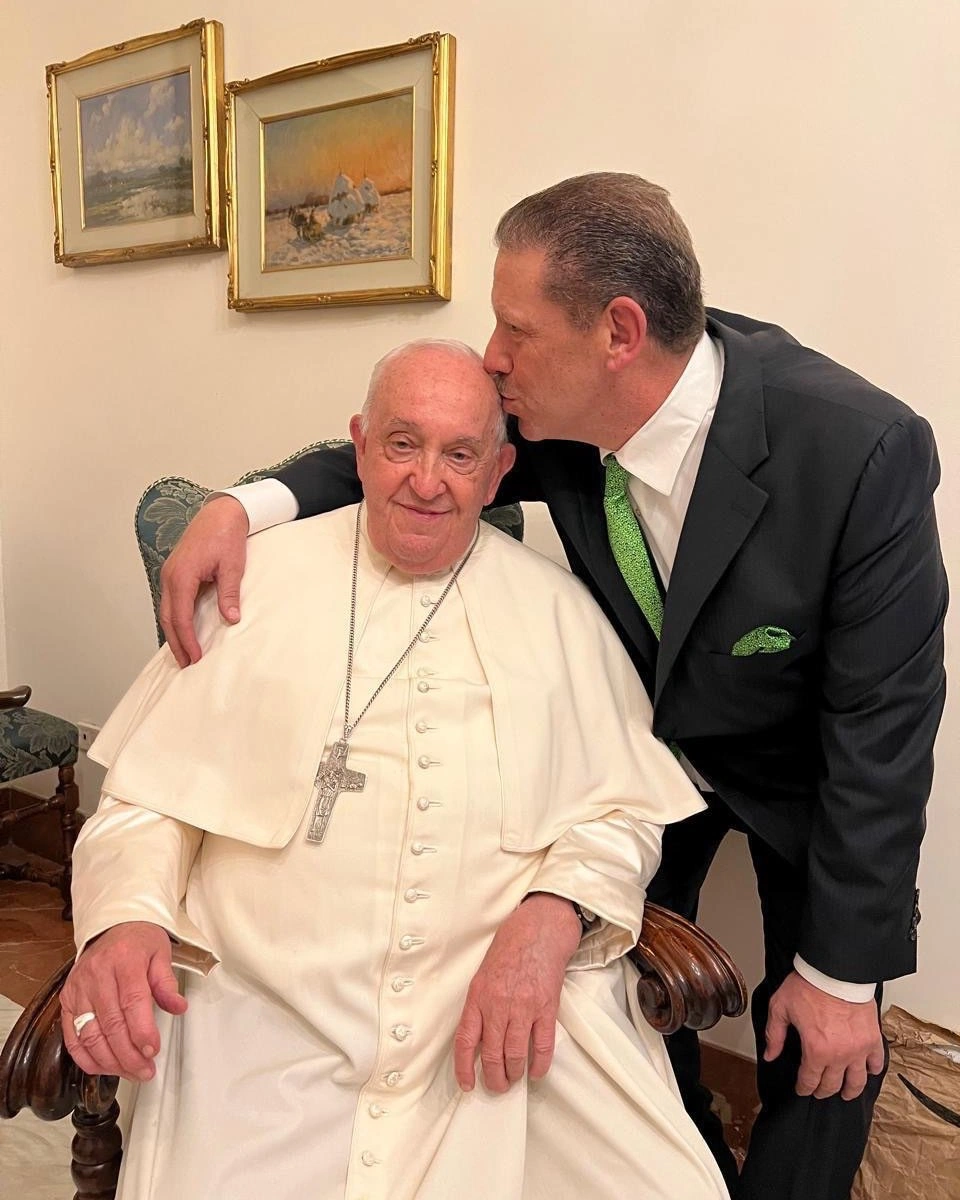
Of the many meetings I had with Pope Francis, there is one in particular that left a profound mark… it was a meeting that included my brother Mauricio, Adrián Pallarols, and me. We were invited to visit him at his residence in Santa Marta. At one point, during the conversation, I told him something I had been thinking about for years: there are two great moments in a person’s life “The day you are born, and the day you discover what you were born for”. His eyes opened wide. He smiled, repeated the phrase and then looked at me and asked, “Why are you telling me this?” I explained that during the pandemic I had listened to him repeatedly speak about the millions of poor people around the world who had little or no access to vaccines and medicines. That concern stayed with me. It eventually became part of the reason I became involved in developing a pharmaceutical technology capable of administering medicines through a small oral film — without needles, without water and without the cold-chain infrastructure that makes distribution so difficult in remote communities. When I explained that, one day, millions of doses could potentially be transported in a single container and taken to places where traditional distribution was almost impossible, his eyes lit up. He looked at me and said, in essence, “Then let’s do it.” That moment stayed with me because suddenly the phrase I had just shared with him became very personal. I felt that perhaps I was beginning to understand a little more clearly what I had been born to do. But what affected me just as deeply was the way Francis made us feel during that private meeting. When he looked at you, he gave you his complete attention. For those moments, it felt as though nobody else in the world existed. There was humor, extraordinary simplicity and a profound sense of peace. At one point he even winked at Mauricio and me before making a joke with Adrián, and in that instant I saw not the Pope, but an extraordinarily warm and loving human being. I left Santa Marta feeling different. He reminded me that purpose is not something you discover simply for yourself. You discover it when what you are capable of doing begins to serve someone else. That is perhaps the greatest lesson I carried away from my relationship with Pope Francis: whatever knowledge, relationships or opportunities life gives you, they acquire their deepest meaning only when you use them to help people who otherwise might never have had that opportunity.
You’ve spent much of your life building businesses and supporting causes. What do you want more room for in your life now, and has that changed as you’ve grown older?
Absolutely. When you are younger, you tend to measure progress by what you are building next: another company, another project, another challenge, another goal. I have always been very intense in that sense. I enjoy creating, taking risks and turning ideas into something real. But as I have grown older, certain moments in my family have changed the way I look at time and at life itself. Watching my son Héctor Jr. get married was one of those moments. As a father, you spend years trying to guide your children, protect them and prepare them for life. Then, suddenly, you see your son standing there, beginning his own family, and you realize that time has moved much faster than you thought. I felt an enormous sense of pride, but also a very deep emotion: I was no longer simply watching my son grow; I was watching him begin a new chapter of his own life. And then came something even more transformative: the birth of my first granddaughter, my son Andrés’ daughter, which made me a grandfather for the first time. I cannot fully describe that feeling. Holding her and looking at her for the first time gave me an extraordinary sense of continuity. You suddenly understand that life is much bigger than your own story. You see your children becoming parents, a new generation arriving, and you begin to think differently about what truly matters and what you want to leave behind. Now, I want to make more room for the people and the causes that truly matter to me. My family, my friendships, helping young people, continuing the legacy of my father, supporting the boxing community and participating in projects that can genuinely improve someone's life have become increasingly important to me. I still have the same desire to build and to take on new challenges, but the question I ask myself today is different. It is no longer simply, “Can this project succeed?” I also ask, “Why does it matter, and who will be better because we did it?” With age, I have learned that time is ultimately our most valuable asset. Success is not only about how much you accomplish, but about being very careful about what—and whom—you choose to give your time to.
What is your motto for life?
There is a phrase that has accompanied me for many years and that summarizes much of what I believe: “Together we stand, divided we fall.” I have seen its meaning in almost every part of my life. In my family, in business, in the World Boxing Council, in Scholas, in international projects and even inside a boxing gym. The greatest achievements are rarely the work of one individual. They happen when people trust one another, complement each other's strengths and understand that the common purpose is greater than any individual ego. My father taught me the importance of loyalty and unity. Pope Francis reinforced in me the importance of encounter and building bridges. And business taught me that you can have the best strategy in the world, but without the right people beside you, very little can be accomplished. So, if I had to reduce my philosophy of life to one idea, it would be this: Stay together. Take care of your people. Never forget those who helped you along the way. Because almost anything meaningful in life is stronger when it is built together.